Sunday, April 10, 2011

Michelin Tyres Epitome of Corporate Social Responsibility

Michelin Tyres Epitome of Corporate Social Responsibility
Syed Ali Mujtaba


The global tyre company, Michelin has established a world class manufacturing facility some 50 km north of Chennai at Thervoy Kandigai in Thiruvallur district of Tamil Nadu.

Operating under the name Michelin India Tamil Nadu Tyres Private Limited (MITTPL) this polish tyre company has a state of the art plant that’s spread over an area of 290 acres of land.


The construction of the boundary wall and fence around the site is complete and the leveling of the ground has commenced. The plant is schedule to start operations in 2012, but will be fully functional only by 2020, absorbing, minimum, of 1,500 workers.

At the moment the training centre is the first building that has come on the site and the main focus of this facility is to offer training to both: Michelin employees and the local community surrounding the site.

“Apart from technical and language training to its own staff, the facility conducts training in soft and technical skills to help improve employment opportunities of the villagers, in general. This includes language training, computer skills, accounting, and other vocational courses like plumbing and carpentry,” says Mrs. Saradamani Dey, Communications Manager, Michelin India Tamil Nadu Tyres Private Limited (MITTPL).

As part of corporate social responsibility, Michelin, has sponsored household socio-economic survey in 31 villages on the periphery of the site. The survey was conducted by Foundation for Rural Recovery and Development (FORRAD) that collected empirical data on education, occupation, skills, income, expenditure, indebtedness and other indicators of socio-economic well being of the people living around the site.

Based on the findings of the survey, Michelin, as part of its corporate social responsibility has devised some mid term and long term strategy and has started a flurry of activity to meet such objective.


Michelin has initiated health camps covering pediatrics, gynecology, general health care and eye care. These camps are held to map out the health status of the local people and assist with a long term health plan. The first health camp was conducted in February 2011 and this was in association with Lifeline Hospitals, Chennai. About 225 people participated in this camp and 205 patients were prescribed medicines.

So far, Michelin has organized four eye screening camps since September 2010 in association with Sankara Nethralaya, the world famous eye hospital in Chennai. In these camps a total of 1143 persons from 8 villages registered and 87 persons successfully underwent cataract operations and additional 186 people were prescribed, and given spectacles.

Apart from such activity, Michelin, in partnership with two national NGOs, the Foundation for Rural Recovery and Development (FORRAD) and Action for Food Production (AFPRO), has taken step towards natural resource management of the area surrounding its site.

The AFPRO conducted a preliminary survey that revealed that agriculture in the region surrounding Michelin site is fed by large rain-fed lakes and most of the lakes at the far end of the irrigation channels were silted up.

Michelin, committed to its corporate social responsibility initiative, has taken steps towards de-silting of the irrigation channels and so far has completed dredging of about 18 kilometers to harness the water resources in the lakes surrounding its site.

“Such initiative may increase the storage capacity of the lakes and maintain the water supply to the farmers living on the far end of the lake,” says Mrs. Saradamani Dey, Communications Manager, MITTPL.

One needs to visit the Michelin site, to have a feel of its corporate social responsibility where conservation of human and natural resources and developmental activity is going on simultaneously. However, there maybe some discontentment too simmering below the surface and that needs separate investigation.

------------
Syed Ali Mujtaba is a journalist based in Chennai. He can be contacted at syedalimujtaba@yahoo.com

India has abandoned Aung Sun Suu kyi,Indians have not

India has abandoned Aung Sun Suu kyi,Indians have not
Syed Ali Mujtaba

India has abandoned the Aung Sun Suu kyi, the democratic icon of Myanmar is the startling revelation that WikiLeaks has made with regards to Myanmar, courtesy, “The Hindu”, India’s national newspaper since 1878.

According the expose, India’s Ministry of External Affairs Joint Secretary Mitra Vasishtha told Political Counselor Geoffrey Pyatt on November 2, 2004 (22299: confidential) describing the Nobel laureate, Aung Sun Suu kyi as someone whose “day has come and gone.”


The WikiLeaks reveals that India has no problem dumping old friend Aung San Suu Kyi to romance Myanmar's generals. Its clear that democratic leader of Myanmar particularly Auug Sun Suu kyi do not aspire those in the mandarins of power in New Delhi.

The Indian foreign office seems to disagree with the Indian consensus on the pro democracy leader in Myanmar once diligently nurtured as Nelson Mandela of Myanmar.

According to Ms Vasishtha, the world had made democracy in Myanmar synonymous with Ms. Suu Kyi, but this may “backfire,” meaning the pro democracy leader has lost relevance to India.

The author of the cable, Embassy Chief of Mission Carmen Martinez, commented that India's “pragmatic” approach was “a severe blow to the leaders of Burma's beleaguered democratic opposition, most of whom draw their inspiration from India's historic struggle for independence and democracy.”

It’s indeed a sad commentary as the world looks upon India as bacon of democracy. It appears, on the alter of ‘pragmatism’, ’democracy is bei8ng sacrificed when it comes to dealing with Myanmar.

One needs to ask those making policies on behalf of India, whether the common Indians will abandon the democratic icon of Myanmar Auug Sun Suu kyi. Can a referendum be held on this count and if that happens its a foregone conclusion that such uncouth rulers will be unseated by the ordinary folks of this country.

The other revelation that WikiLeaks makes is India’s refusal to deny that it not supplying arms to the military junta in Myanmar. In a cable sent on November 7, 2007 (129067: confidential). American Political Counselor Osius suggested Joint Secretary T.S. Tirumurti, to make a public declaration of New Delhi’s policy of s ban on arms sales to Myanmar, he offered no response.” The joint Secretary however acknowledged that a Myanmar request for military equipment had been turned down by India.

This again is something puzzling. Indian Army Vice-Chief Lt. Gen. S. Pattabhiraman in a interview to the Force magazine stated that in the past India had supplied 75/24 Howitzers to Burma though the numbers were not “much” they were neither “symbolic”. He also disclosed that 105-mm Indian field guns were given to Myanmar.

The Indian Navy, transferred two BN-2 ‘Defender’ Islander maritime surveillance aircraft and deck-based air-defence guns and varied surveillance equipment to Myanmar.

According to sources, as part of the agreement reached at the Home Secretary level talks, India supplied 98 truckloads of arms and ammunition to Myanmar. India also offered unspecified number of T-55 tanks that the Indian army is retiring, armored personal carriers, 105-mm light artillery guns, mortars and the locally designed advanced light helicopters to Myanmar.

All this was part of the deal struck with the military junta to cooperate in flushing out militant groups operating from its soil in the northeast region of India. It’s also to neutralize Myanmar’s dependence on Chinese arms.

One has to recall the story of “operation leach” in Adman islands that revealed that India was officially supplying arms to the pro democratic forces in Myanmar to carry out the struggle for freedom. Then India made a 360 degree turn around and arrested the same people whom it supplied arms slapping charges on them of treason, and gunrunning.

The issue snowballed into a major controversy and the rift between then Naval Chief Visnu Bhagwat and then defense minister George Fernandez came in open leading to the sacking of the Naval Chief by the Defense Minister.

What an irony, India’s policy of supplying arms to the pro democratic forces in Myanmar is changed to provide arms to the junta; apparently to flush out the insurgents operating in north-eastern India but in actual fact is being used to crush the ethnic groups and democratic forces raising standard of revolt.

Mohan Kumar, MEA Joint Secretary dealing with Myanmar, is reported in a cable sent on February 20, 2007 (97303: confidential) saying to the American diplomat that engagement with the Myanmar junta was an imperative for India for several reasons.

First India’s 'Look East Policy' to reach out to the ASEAN. Second coordinated effort with Myanmar is required to develop India’s northeast region and to tackle insurgency there, third is the strategic necessity to contain Chinese influence over Myanmar.

In India's look east policy, the trilateral highway between India, Myanmar and Thailand plays a major role to reach the South East Asian countries. So is the Trans Asian railway that is to connect New Delhi with Hanoi.

A deep economic relationship with Myanmar in India's view would give a tremendous boost to the development of its northeast region. The planned infrastructure development of road, rail and waterways are all steps in this direction. This includes, Kaladan multi-modal transport project in the Rakhine State and road project to improve access to a border-trade crossing opened in January 2004 IN Chin State.

According to Mohan Kumar, MEA Joint Secretary, “Bangladesh's stubbornness in allowing access to transit routes for trade leaves India with Burma as the only alternative to connect the northeast to ASEAN markets.”

The MEA joint secretary says insurgency in the northeast region is another reason to engage Mayanmar. “The ULFA guys are hiding in Burma and screwing the hell out of us and Burma is the only one helping us to tackle the northeastern insurgency.”

“India is also trying to deal with the insurgency by creating economic opportunities in the northeastern region, and Myanmar was crucial for this, the economic incentive may lure the ULFA to lay down arms”.

India sees China's involvement in Myanmar having geo- strategic implications for the region and may like to engage Myanmar through greater economic strategic cooperation, so the Chinese do not have a free run.

Reflecting the India’s worries about China, Ms. Vasishtha said “what you hear about the Chinese People's Liberation Army (PLA) in Burma is only the tip of the iceberg. The U.S. intelligence must surely know this. China took Myanmar for granted and this was why Myanmar wanted to engage with India, she said.

Ms. Vasishtha confirmed Indian grant of $20 million to the junta for the development of energy and gas infrastructure, however, she offered no conclusive answer why Myanmar sold it gas to China.

Indian- Myanmar relationship faces the pangs of proximity. The Indian government faces the moral dilemma whether to listen to the call of the conscience that demands to side with the democratic forces, or adhere to the rules of real politics and align with the military rulers in Myanmar.

Indian government was believed to have resolved this moral dilemma by following the middle path, giving moral support to the democratic forces, at the same time engaging the Military junta for geo strategic reasons.

The WikiLeaks expose however has revealed that idealism has no place in the modern state craft of India. The sentiments and emotions that bind India and Myanmar relations are of little consideration in the current policy framework that tantamount to sidelining Aug Sun Suu Kyi.

What is apparent is there is a total disconnect between India and the Indians in dealing with Myanmar. Can a government makes policies opposed to the wishes of its people. Can India afford to abandon Aug Sun Suu Kyi annoying millions of Indians who admire her as an icon of democracy?

If the answer is no, then it’s high time that such policy is changed immediately or the current dispensation making such policy may pack off its bags.

---
Syed Ali Mujtaba is a journalist based in Chennai. He can be contacted at syedalimujtaba@yahoo.com

Myanmar in Transition - Is it a bacon of Light?

Myanmar in Transition - Is it a bacon of Light?
Syed Ali Mujtaba

There are some seminal changes taking place in Myanmar that needs attention amidst the news of India wining the world cricket world, tsunami cum quake in Japan, and civilized world is hell bent to make Libya, another Afghanistan nay Iraq,

Among such hyperboles the news that Myanmar's military strongman General Than Shwe who ruled for almost two decades has stepped down from his post has not raised the cockles of the opinion makers of the world.


According to reports, the Seventy-eight year old Senior General has disbanded the junta and its organ the State Peace and Development Council and handed over the power to the civilian government that was elected last year in the controversial election.

Even though some may feel that General Than Shwe will continue to play a significant role in the country's governance as army hierarchy has retained a firm grip on power, it’s a change in Myanmar that is obvious and the discourse of politics may be the same in that resource-rich country.

According to reports, Myanmar’s Parliament met from March 9 to March 23 and discussed a whole range of issues telling the state of affair in that country and giving an impression that a modicum of democratic apparatus is being put in place after almost five decades of military rule.

The deliberations in the Parliament disclosed some very non consequential facts such as the proportion of Chin nationals employed at the 15 Electrical Engineers’ Offices in the Chin State. The answer by the Muftis was 177 out of 197 or 89.85 percent. Along with the answer came the revelation that the Chin State, with a population in excess of 500,000, has a total electricity generation capacity of 3 megawatts, enough for less than one in 10 people to use a 60-watt light bulb.

Similarly there was a question on the number of “local” teachers employed at Basic Education High Schools in Buthidaung Township. The answer was 50 out of 51, and the non-local being the wife of a “service personnel assigned to the region.” It reveals something that was supposedly to be hiding.


In all, 46 questions and 17 proposals were submitted in the lower house, while 33 questions and 16 proposals were submitted in the upper house. Many of these have focused on regional infrastructure, introduction of compulsory military service, prevalence of tax evasion, lack of availability of loans for small-to-medium enterprises, manipulation of commodity prices, excessive cost of mobile phones, low internet connectivity, sale of fuel onto the black market, prevalence of gambling, conducting of a national census, cost of middle and high school education and the raising of pensions and government salaries.

The fact that such details are reported by the “New Light of Myanmar,” the only source for the goings on in Parliament reflects the level of accountability, shown by the military backed political party and such the military per se that now willing for a change as so far they had never considered to take into account the aspirations of the people while ruling the country with an iron hand.

The Parliamentary debate even though confined to fifteen minutes has brought some changes from the past. The information provided by the Junta sanctioned reports is useful in determining the actual situation in Myanmar. The fact that they can be useful to push for more substantial reforms is something path breaking.

Another redeeming feature of the Parliament functioning in Myanmar is that there is a sense of optimism and satisfaction in the opposition camp that a parliamentary democracy with its entire pitfall is at work in their country. They are confident that they have at least established a rapport with certain representatives in the USDP, the ruling party, a prospect that was unthinkable under the SPDC regime.

However, all is not hunky-dory as one may sound. Many questions and proposals by MPs have not even made it to the Parliament sessions. Questions and proposals have to be submitted to the speakers’ office 10 and 15 days in advance. MPs face jail for revealing the contents of Parliamentary discussions and no reporters are allowed into the parliament buildings.

The state media presented only a part of what’s going on in Myanmar’s capital Naypyidaw. Much of the discussion has apparently been censored from media reports, and questions from MPs sometimes appear truncated.

The other lows are none of the issues that came up for discussion during the election campaign were raised in the Parliament session. As such, there remained little interest in general public about the parliamentary debate. The fact that opposition parties too have failed to keep the momentum going explaining to the public exactly who they are, and have faded into the background is the dark spot in the emerging silver linings in Myanmar’s tryst with democracy.

The irony is that the discussion in both mainstream and exile media about the Parliamentary sessions has been minimal. Most international media coverage of Myanmar had the hackneyed line about issues of economic sanctions and the role of the NLD. They more keen to paint the ‘RAMBO -4’ image of the deteriorating conditions inside that country than making efforts to realize the values of the parliamentary system and the long term benefits that may be in store.


Anyway, the big question is will Myanmar’s new bicameral Parliament going to bring any rapid changes in that country. The answer is simple – very unlikely because the aims of the USDP and the military rulers are quite divergent. The interesting fact however is, the situation in Myanmar is quite different in 2011 then what it was in 1990.

Just as the interests of the former generals in Parliament are different from the opposition MPs; the new guards are unlikely to be the same as those who have remained behind the military uniform for long.

-----
Syed Ali Mujtaba is a journalist based in Chennai. He can be contacted at syedalimujtaba@yahoo.com

Wednesday, February 16, 2011

I Am a Dreamer, But Not the Only One

I Am a Dreamer, But Not the Only One
Syed Ali Mujtaba

People say, I am a dreamer but not the only one, there are many like me, who may dream similarly but it’s hard to find them, and still harder to connect with each other. It’s an interesting happening that has happened on the internet, and needs to be chronicled, as many other similar dreamers may like to join me to make the dream come true.

It happened so; I wrote a piece for a web portal that highlighted the plight of commercial sex workers in Chennai. It was a journalist piece, based on real life interviews. Thousands hits were made to this story and response that came to suggested that it touched emotional chord and moved hearts.

One such response was different. It was from Ms Yvonne, a journalist based in Stockholm, Sweden, who wrote expressing her desire to help such needy and requested me to connect her to a real life person genuinely seeking help. I could feel her concern as she kept on pestering me to find a person that she could support.


Yvonne’s commitment made me think and this triggered a dream. I have a huge ancestral house at the Nalanda district in Bihar, a state of India. The house that’s now in a depleted condition has a pound inside and has sufficient space to run an orphanage cum school. It’s located in a village called ‘Dumranwan’, less than 20 miles from the ancient Nalanda University’s ruins. One can Google and locate the ruins, once a great seat of Buddhist learning. Maybe the map can also bring nearer to that secluded village, where this house stands frozen in time.

The reason why I am ready to make this house a seat of learning was because none of my family members like to go there, none is interested in renovating it. The house can not be sold as there are no buyers to buy such a property. So the only option left is to see it go down or donate to some charitable organization and forget about it or try run it with help of friends and some like minded persons.

So, I wrote to Yvonne, that I am ready to convert this house as model school cum orphanage, a centre of international standards. This centre will cater to students from extremely poor family, whose parents cannot afford their education. The students once enrolled will live there and get every thing free- food, lodging, books, dress and every thing that one may need. They will play and study together in totally new environment, away from their shanty homes.

In India, those at the bottom of the society see children as a helping hand. The girls help the mothers in the household work and boys go to work with their fathers in the farms. The challenge is to locate such students and get consent of their parents to join such an institution. This may be a difficult but definitely not impossible because there are always some help in such matters.

The students will go up to 12th grade, but to begin with the center will have kids from 0 to three grades. As they grow they may add on the classes. The institution will have Hindus, Muslims, Christians, living side by side learning the core values how to live together in perfect harmony.

The school may have sizable Muslim students as they badly need such institution to get training to face the competitive world. I am talking about that segment of Muslim society that sends their children to Madarsas. In such a centre the poor Muslim students may get the best of the religious and worldly training and subjects like science mathematics and computers.

When I wrote Yvonne about this idea, she jumped in excitement and wrote back, how to make such a place a unique place of learning and living, create a harmonious atmosphere where lots of experimentation on learning and education could be done and where students are molded to become a decent human being.


Yvonne, married to Nick, an Australian and has a child Samuel wrote back, “its really feels like a Gods thought with you willing to turn your house into an orphanage cum school and we do our part here to help those in need. One of my main interests is in children and for me it’s an absolute that there will be a NO corporal punishment what so ever and run this place as a sanctuary away from the harsh world; a place where the soul can grow into splendor and by using methods that supports that very growth. And with respect for all walks of spiritual and religious life!

I wrote to her that the project can be divided into different phase. The first will be to do the renovation work of the house. The house is standing though it has broken ceilings, plaster pealed off, and no paint for ages. There is need to repair them all that and construct boundary wall and have an entrance gate at the compound. May be one may give a deeper look to the house to ascertain the actual cost of its renovation. My wild guess is at least $10,000 USD would be needed to give it a facelift. It may be less or more, I am not a civil engineer.

The biggest problem there is of power. There is no electricity in that part of the world. So, to run the electrical appliances and connect it with rest of the world, .installation of a Genset is a must. The Genset can run with the help of solar batteries and one has to get it from somewhere. Luckily, the place is accessible through a motorable road, and so anything can be transported there.

Once a semblance of infrastructure put is created, and then some new construction has to be made to covert the house into a full-fledged centre of learning and training and much more. All this may require more funds.

Yvonne, wrote to me, Money may not be a constraint; I have celebrity friends which are good for raising money on a bigger scale. Of course one doesn’t have to be a celebrity to raise money; but every help, no matter from who, would be good for the bigger picture!”

I wrote her second phase will need dedicated and innovative teachers who can mold the children in becoming an educated and nice human being. Yvonne, has answers to this as well. She writes, “I also think it would be quite easy to get volunteers from Sweden that will work for somewhere to sleep and food. So many Swedes/Scandinavians goes backpacking for a year or two and want to do something meaningful. Then there are many (who may not be backpackers) who want to stay even longer and contribute for the chase of such a wonderful dream.”

I gave her assurance that many dedicated young Indians may too volunteer and get associated with this project; once they realize that the centre matches the international standards.

The big task will be to find sponsors for each child, and those adopting one have to behave as responsible parents. Its only then one can determine the strength of the students and many factors have to be taken into account for enrolling them. Yvonne is optimistic and is confident that all such hurdle, can be crossed and if God’s grace is there nothing can stop those serving the Lord.

The way forward may be to register a charitable trust and open a bank account and then take donations to start the project. The problem is one needs center government’s clearance to get foreign funds. With corruption and nepotism associated with bureaucracy, getting such permission may not be a easy job.

I remain skeptic about this project and in a lighter vein I wrote to Yvonne, if a fraction of money stacked by some Indians in cash heavens abroad can be diverted to this project then only this dream can only become a reality.


Yvonne thinks otherwise and remains convinced that this project will take off;”Well there are bottlenecks for anything one may like to do and this may not deter from chasing the goal. I have been thinking about how to get all the “left over” wealth from Sweden to India. You can easily get free, not the latest but very good, computers (by the numbers) for example for free by people just swapping to the latest model, or big companies just giving away due to updating. And almost brand new furniture and all kinds of things; cell phones etc. We have a shipping company just beside us and I will pay them a visit (and maybe bring some of my celebrity friends) and ask them to ship for free. And of course also completely new things that people are willing to give for a good cause. (Toys are so easy to get!) I mean it’s quite easy to get the things we would need material wise as long as someone are willing to ship it cheap or for free (the big cost is to ship from here – so expensive). But that is a later thing.”

Well that’s the story how two persons, quite unknown to each other, come together to chase a common dream. Both feel there are others who too may be dreaming on similarly and are welcome to come on board and contribute in their humble way for the realization of a noble dream.

---
Syed Ali Mujtaba is a journalist based in Chennai. He can be contacted at syedalimujtaba@yahoo.com

Monday, January 31, 2011

London Nostalgia - Impressions of a Researcher

London Nostalgia - Impressions of a Researcher
Syed Ali Mujtaba

My association with England has been primarily for academic purposes. In the year 1994 I was awarded government of India fellowship to pursue my doctoral research further while doing PhD at the JNU, New Delhi.

I got this field grant because my thesis “The Demand for Partition of India and British Policy 1940-45” demanded an archival survey of the British sources.

My thesis also demanded incorporation of British perspective to the Partition debate particularly with reference to its India policy during the Second World War.

So this pursuit made me stay for six months in England. I was based in London and lived in a rented room at the 45 Colliers High Road, South London. It was quite close to Sainsbury supermarket where I use to frequent for my groceries.

The building where I lived was owned by a Pakistani of Indian origin. It had some very interesting people living there. There was a Pakistani couple in the ground floor, a group of Korean students in the second floor. There were two Romanians gentlemen and an English couple besides me in this building.

I use to take the southern line tube and go waterloo from where I use to walk to the backfires bridge where the India Office Library was located at that time.

During my stay in London I use to visit the School of Oriental and African Studies library the Record office at the Q’s gardens and the British Museum.

Some time I use to get down at Temple tube station walk to the High Court side either to visit the Indian consulate office or to the LSE, while on some other day I may be walking straight to the Kings College to attend some Talks organized there.

I used to be spent my evenings sometimes at the Piccadilly Circus, the China town, the globe theater and the Charring Cross. Some times I use to walk along the embankment watching the flow the river Thames, go up to the Big Ben and see the time, take a round of 10 Downing Street and walk along the British Parliament.


At times in the evenings, I use to go to the Indian YMCA, British Museum and Baden Powell Hall for some programmes.

While staying in London, I use to frequent Oxford University for my research. Normally I use to go the St Anthony College to meet some Professors or to sit at Bodleian library at the Oxford University.

Similarly, I use to travel to the Cambridge University and even stayed with some friends for few days there. At the Cambridge I had given a talk at the Darwin College. I had also visited the Kent University at the Canterbury.

Saturday, December 4, 2010

It’s Bird Watching Season in Tamil Nadu

It’s Bird Watching Season in Tamil Nadu
Syed Ali Mujtaba

Hello bird watchers, the bird watching season has arrived in Tamil Nadu. If you are looking for fun frolic and excitement, then its time to pack your backpacks with cameras and embark on an enthralling bird watching trip to three different circuits in the southern state of India.

The bird watching circuit is divided into three regions s based on the ancient kingdoms that once flourished in this part of the world. They are the Pallava Kingdom, the Chola Kingdom, and Pandya Kingdoms.

The Pallava dynasty ruled for about six hundred years until the end of the 9th century AD in the northern Tamil Nadu region and the southern Andhra Pradesh region

The Pallava kingdom for bird watching is in and around Chennai home to India’s one of the oldest bird sanctuaries and the largest brackish water eco-system.

The potential bird nesting locations in Pallava kingdom are Vedanthangal bird sanctuary, Karikili bird sanctuary, Pulicat lake bird sanctuary, Kaliveli lake nackwaters of Mahabs and Muttukaadu.

Vedanthangal bird sanctuary is one of the oldest water bird sanctuaries in the country. Vedanthangal in Tamil language means 'hamlet of the hunter' and this area was once a favorite hunting spot for the local landlords some 300 years ago.

The region attracted a variety of birds because it’s dotted with small lakes that acted as feeding grounds for the birds. The sanctuary features thousands of birds coming from various countries, some of which can be easily identified.

Some easily found bird species include Cormorants, Darter, Grebes, Large Egret, Little Egrets, Moorhen, Night Herons, Paddy Bird, Painted Stork, Pintails, Pond Heron, Sandpiper, Shovellers, Terns, White Ibis and many more.

The migratory birds include Garganey Teals Canada, Snake Bird Sri Lanka, Grey Pelican Australia, Grey Heron Bangladesh, Open-billed Stork Bangladesh, Glossy Ibis Sri Lanka, Painted Stork Siberia, Spoonbill Burma and Spot Bill Duck Canada.

Karikili Lake bird sanctuary is a haven for ducks and waders. Pintailed ducks, Garganey teals, common teals, Shovellor, Little Grebe or Dab chick, Herons and Egrets are the other avian visitors.

Pulicat Lake Bird Sanctuary is the second largest brackish – water lake or lagoon in India. It straddles the border of Andhra Pradesh and Tamil Nadu states on the Coromandal Coast in South India.

The lake encompasses the Pulicat Lake Bird Sanctuary. Every year approximately 15,000 Greater Flamingos are reported to visit the lake along with pelicans, kingfishers, herons, painted storks, spoonbills and ducks.

The highest concentrations of flamingo are found in the periphery of the lagoon where the water level is below 40 centimeters (16 in). The concentrations of flamingos are also associated with high algal, fish and benthic diversity.

Other water birds in the area include Spot-billed Pelican, seven species of herons and egrets, Painted Stork, Greater Flamingos, ducks, 20 species of shorebirds, gulls, terns, Little Grebe, Indian Cormorant, Little Cormorant, Asian Openbill Stork, Black-headed Ibis, Eurasian Spoonbill, Lesser Whistling Teal, Spot bill Duck, Great Thickknee and Stone Curlew.

Several species of wintering waterfowl have been noted including Bar-headed Goose, Ruddy Shelduck, Eurasian Wigeon, Gadwall, Common Teal, Northern Pintail, Garganey, Northern Shoveler, Common Pochard, Brown-headed Gull, Black-headed Gull, Whiskered Tern, Gull-billed Tern and Caspian Tern. Birds of prey which appear in winter are the: White-bellied Sea Eagle, Osprey, Harriers and Peregrine Falcons.

The Chola kingdom flourished till the 13th century AD around Thanjavur and Tiruchirapalli districts of Tamil Nadu. The Chola Kingdom is home to important water birds like High flying Barheaded Goose, long migrants like White stork and White necked Stork, Grey Pelican, Ibis etc.

One can enjoy the bird watching at the Karaivetti bird sanctuary, the Kallaperumbur bird sanctuary, the Vaduvoor bird sanctuary, the Udhayamarthandapuram bird Sanctuary and Point Calimere bird sanctuary.

Karaivetti bird sanctuary is now home for more than 180 species of birds which includes 100 species of land birds. During peak season more than 25000 birds has been recorded. In the last season about 250 nests were counted and is a breeding ground for Grey Pelican, Spoonbill, Ibis, Openbill stork, Cormorant etc. Important land bird species are Rosy Pastor, Peregrine Falcon, Osprey, Marsh Harrier, Tawny Eagle, etc.,.

Vaduvoor Bird Sanctuary is a favorite flyaway spot for migratory birds and has recorded congregation up to 20000 birds in November. The ideal time to
visit the sanctuary is November – December when congregation of migratory birds is maximum. One can spot more than 40 species of water birds like Ibis, Painted stork, Grey pelican, Pintail, Cormorant, Teals, Herons etc.

Point Calimere Wildlife and Bird Sanctuary is providing shelter both for the animals and birds. It is the home for near threatened Blackbuck Antelope. Point Calimere Wildlife and Bird Sanctuary has the largest population of Blackbucks in South India. Other notable animals include: Spotted Deer, Jackal, Bonnet Monkey, Wild Boar, Monitor lizard, Short-nosed Fruit Bat, Small Indian Civet, Star Tortoise, Indian Grey Mongoose, Black-Naped Hare, Jungle Cat and Feral Pony.

Point Calimere Wildlife and Bird Sanctuary has recorded the second largest congregation of migratory water birds in India, with a peak population in excess of 100,000, representing 103 species.


In October these water birds arrive from Rann of Kutch, Eastern Siberia, Northern Russia, Central Asia and parts of Europe for their feeding season and start returning to those breeding places in January.

The water birds include threatened species like Spot-billed Pelican, Spotted
Greenshank, Spoonbill Sandpiper and Black-necked Stork. Near threatened species include White Ibis, Asian Dowitcher, Lesser Flamingo, Spoonbill, Darter and Painted Stork. Not only that, if lucky, one can spot Bottle nosed Dolphins. Also, the shoreline beaches of the sanctuary are a regular nesting site of the endangered Olive Ridley Turtle.

The Pandyan Kingdom flourished until the 15th century AD and the great traveler, Marco Polo mentioned it as the richest empire in existence in the world.


The bird watching region of the Pandya Kingdom roughly comprises the area near Madurai and Ramnad districts of Tamil Nadu. It includes; Vettangudi Bird Sanctuary, Chitrangudi Bird Sanctuary, Kanjirankulam Bird Sanctuary, MelSelvanur-KeelSelvanur Bird Sanctuary, Koonthankulam Bird Sanctuary, Suchindram-Theroor Bird Sanctuary.

Kanjirankulam Bird Sanctuary is one of the preferred nesting sites for heronry species a colonial bird migrating to South India. This bird sanctuary receives nearly 170 species of birds. Breeding population consists of Painted stork, White Ibis, Black ibis, Little egret, Large egret etc.

While MelSelvanur-KeelSelvanur Bird Sanctuary is the biggest bird sanctuary in Tamil Nadu and located near Sayalkudi in Ramanathapuram district, the Koonthankulam Bird Sanctuary is home to the largest reserve for breeding water birds in South India.

Suchindram -Theroor Bird Sanctuary is noted for the wide variety of migratory water birds that winter there, including: near threatened painted stork and spot-billed pelicans. Also seen here are cattle egrets, great cormorants, darters, purple swamphen, and bronze-winged Jacanas. Resident raptors include pied kingfisher, brahminy kite and marsh harrier.

Other water birds are Dabchick, grey heron, Garganey, purple heron, cinnamon Bittern, open bill stork, cotton pygmy goose, whiskered tern and little tern, black-winged stilt, greenshank, little ringed plover and the common sandpiper.
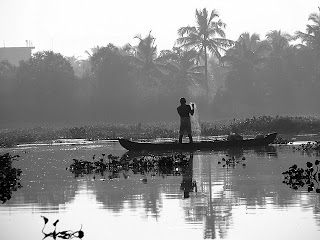

The Pallava Kingdon tour is on 18 and 19 December 2010. The Chola Kingdom tour is on 24, 25 and 26 December 2010. The Pandya kingdom tour is from January 3-6 2011. The contact person for these tours is Mr. "Krish" a.k.a Krishna Kumar K J. He can be reached at (krish78@gmail.com)

---
Syed Ali Mujtaba is a journalist based in Chennai. He ca be contacted at syedalimujtaba@yahoo.com. His earlier writing is “Eco-Adventure Camp” http://archives.chennaionline.com/hotelsandtours/Tours/2006/01eco.asp

Wednesday, December 1, 2010

Omar Khalidi- A Campaigner of Social Justice of Indian Muslims

Omar Khalidi- A Campaigner of Social Justice of Indian Muslims

Syed Ali Mujtaba

The untimely death of the Cambridge based scholar Dr. Omar Khalidi is quite shocking. He was 57. Preliminary reports suggest that he was fatally struck by a subway trolley near the Kendall Square station in Cambridge, USA.

He was working at MIT and left behind his wife and daughter. I have known to him for his unending passion for the pursuit of social justice of Muslims in India. My deepest condolences go to his family.

Dr. Khalidi was born in Hyderabad and was the son of Professor Abu Nasr Khalidi, a well known scholar of Arabic and Islamic studies at Osmania University. He got his BA from Wichita State University, ALM from Harvard University School of Extension Studies and PhD from University of Wales-Lampeter, UK.

I have come to know about Dr Khalidi when I was in Hyderabad working as reporter in 1995-6 and also researching on the princely state and Partition of India. I was fresh with my doctoral work “The Partition of India and British policy 1940-45.” I had read his work “The fall of Hyderabad,” that graphically brings out the police action against the princely state of Hyderabad and the atrocities committed against the Muslims in its aftermath.

I contacted Dr Khalidi at his e mail address (okhalidi@MIT.EDU) and he responded to me immediately. Though my project was indefinitely postponed but my contact with him remained intact.

He was in Chennai in 2002 and stayed at Chola Sheraton and we had a late evening conversation on the theme Indian Muslims that went on till the wee hours and we both needed a bad sleep still the talk remained inconclusive.

We talked about Muslim publications in India the defunct ‘One Nation Chronicle’ rechristened ‘Nation and the World.’ We talked about Mili Gazatee, Muslim India, role of Syed Shahabuddin in Babri Masjid, role of Syed Hamid in education and Hamadard University. We talked about M.J. Akbar and Seema Mustafa and Sultan Shahin and many others.

Our conversation did touch up Hyderabad, and we talked about Prince Mukaram Jah, the fabled Falaknuma, Chomohalla and the Nazri Bagh Palaces. The Telegana politics too came up for a thought.

Dr Khaladi, was more of a researcher than an armed chair commentator. He had advised me not to loose track of research and base my submissions on hard facts.

To hammer home the point, hard facts should be the only arrow, in one’s quiver, he told me, adding he had all the copies of Muslim India, because it contains huge data to rely upon.

Among several of his work, the one we talked was “Romance of the Golconda Diamonds.” He explained that in the state of Golconda that was later absorbed in Mughal India mining activity for diamonds once flourished.

Dr Khalidi did a interview with me that day on his pet topic the current status of Indian Muslims. He was amused to hear me say that a middle class is fast emerging among contemporary Indian Muslim community and this is happening at breath neck speed after the liberalization of the Indian economy since 1990s.

Now India Muslim youth are not much interested in going to Gulf countries for jobs as they did so in the 1970s and 80s. They prefer to stay back in India where there exists an ample opportunity to make a living. I told him after liberalization, the general discrimination theory does not work, the entrepreneurs mostly Hindus do not have any inhibition in recruiting Muslims, because they are hardworking, honest and upright.

Dr Khalidi was bemused; perhaps my thoughts did not fit into discriminatory stereotype. I remember him talking about Muslim presidents of India that were to show to the world that Indian Muslims are not discriminated but then do a head count in the government and private offices and you will get a real picture of Muslim discrimination.

I told him now, this is no more the case, the software industry, so many other industries which is driving the Indian economy, has countless Muslim youth in its folds and they are doing well in privatized corporate Indian economy.

I remember Dr Khalidi asking me to give him contacts in various India cities, so that he can do a survey on this issue through his questioners and promised to pay those who get involved with him in this project. I think he may have incorporated these points in his book is “Muslims in Indian Economy” published in December 2005.


Dr. Khalidi will be remembered for his courage in taking on issues that others feared to tread. .He was known for his commitment to the cause of justice and fairness for Indian Muslims.

His last article was on the recent Babari Masjid judgment was seminal. He lambasted the Archilogical survey of India (ASI) that provided the clinching evidence for the ‘learned’ judgment. Read through the link- “ASI: Hindutva's handmaiden.” http://www.outlookindia.com/article.aspx?267374

Dr. Khalidi was a pioneer in the field of research on Indian Muslims and contemporary Indian politics. He left behind him a monumental legacy that had a significant impact on the political landscape of India and a multitude of people were motivated and inspired by his work.

He authored the much acclaimed book “Khaki and Ethnic Violence in India: Armed Forces, Police and Paramilitary During Communal Riots”. The book is in its second edition, revised and enlarged edition came out in December 2009.

As an independent scholar his research interests were in the sociology of politics, upward and downward economic mobility of ethnic groups, nationalism and diaspora and Islamic architecture.


His other works include 'Indian Muslims since Independence', 1996, and edited 'Hyderabad: After the Fall', 1988, a collection of academic papers.

He is the author of several articles on Islamic architecture like “Approaches to Mosque Design in North America” and “Import, Adapt, Innovate: Mosque Design in the United States.”

Even though he was based in the US he had the pulse of Indian Muslims in his hand. He could fearlessly speak about the discrimination of Indian Muslims and he supported this with hard facts, be it the head count of Muslims in Indian Defence forces or in the news rooms.

Passing away of Dr Omer Dr. Khalidi is a great loss to Indian Muslim. He lived every moment in India.Perhaps the best way to carry forward his legacies would be to create a chair in his name in any of the Indian university to carry out research on the social issues of Indian Muslims. It may be a humble way to pay tribute to late Dr. Khalidi.

------
Syed Ali Mujtaba is journalist based in Chennai. He can be contacted at syedalimujtaba@yahoo.com